Need concrete driveways in Lake Stevens?
Planning a new driveway or patio? Send a request and Partilla Concrete will point you to a local provider in our network. Or Request a callback to ask about provider availability.
No obligation
Request an estimate for your driveway
A driveway takes a lot of weight and a lot of weather. In the Lake Stevens area, steady rain, damp and moss can wear on a slab for years. Most slabs show small signs first. If you spot them early, you have time to think, compare options and plan without stress.
Partilla Concrete is a referral service. We do not pour or repair concrete. We connect you with an independent provider in our network who builds new driveways and other concrete flatwork. This page explains the signs to watch for, what a new driveway project includes, and how to get a clear, written estimate.
A damaged driveway can feel like a big, costly problem. Take a breath. Most slabs give clear hints long before they fail. Look at yours in daylight, then read on.
Thin hairline cracks are common and often harmless. Cracks wider than a pencil line, or cracks that branch out, deserve a closer look. If one side sits higher than the other, that is a stronger warning.
In a long wet season, water should run off your driveway. If it sits in puddles, the slab may have settled or the slope may be wrong. Damp spots grow moss, and moss makes concrete slippery.
A slab that dips or tilts often has soft ground under it. Rain can wash away soil beneath the concrete. The gap grows slowly, so check the edges and the joints.
If the top layer peels or turns to dust, the surface is breaking down. Rough patches, bare gravel and chipped edges are all signs of wear.
Not every flaw means a full tear-out. Sometimes concrete driveway repair is enough for one small crack or a worn corner. When damage is wide, uneven or spreading, a new pour may cost less over time than patching again and again. A local provider can look at your slab and explain both paths.
Watch where rain goes. If it runs toward your crawl space or against the wall, that is worth taking seriously. Wood-frame homes do not like constant damp. Ask a provider whether the slope can be fixed in a new pour. If you see cracks in the house itself, ask whether foundation repair experts should take a look as well.
Request a callback to check provider availability in your area.
The exact steps vary by provider and by site. Most projects follow a similar path:
Start with how you use the space. Count your cars and think about guests. A wider spot for turning around can save your lawn.
Many home driveways are about four inches thick. Heavier trucks or RVs may need more. Reinforcement helps hold cracks tight.
For finish, a broom texture gives grip when it rains. Smooth surfaces look clean but can be slick. Ask the provider what works for damp weather.
The apron is the part of the driveway where it meets the street or sidewalk. Cities often set rules for its width, slope and materials. Some places require a permit for the work.
A good provider can tell you what your city asks for. Ask who handles the paperwork before you agree to anything.
Ask for a written quote that lists the size, thickness, base, reinforcement and finish. Ask whether the provider is licensed and insured where your city requires it. Ask how drainage will be handled. Plain answers are a good sign. Pressure to sign on the spot is not.
It helps to compare more than one quote. Look at what each includes, not just the total.
Fresh concrete does not like heavy rain. Many providers plan pours for drier stretches and cover the slab when showers pop up. Mild temperatures are helpful, since they let concrete cure slowly and evenly. Ask how your provider handles a surprise storm.
Keep cars and feet off the slab until the provider says it is ready. Foot traffic often comes first, and vehicles come later. Keep sprinklers and puddles away from fresh edges.
In the first weeks, brush off leaves and debris. Sealing can help the surface shed water and resist moss, so ask if it suits your slab. Keep an eye on the joints, and note any new cracks early.
You do not need to decide everything today. Start by noting what you see and snapping a few photos. Then ask for a written estimate and compare it at your own pace.
Request a callback to talk through your project and ask about provider availability.
Providers break up the worn concrete and take it away so the new slab starts clean.
The ground is shaped so rain runs away from your home, not toward it.
A packed base and reinforcement help the new slab stay level and hold cracks tight.
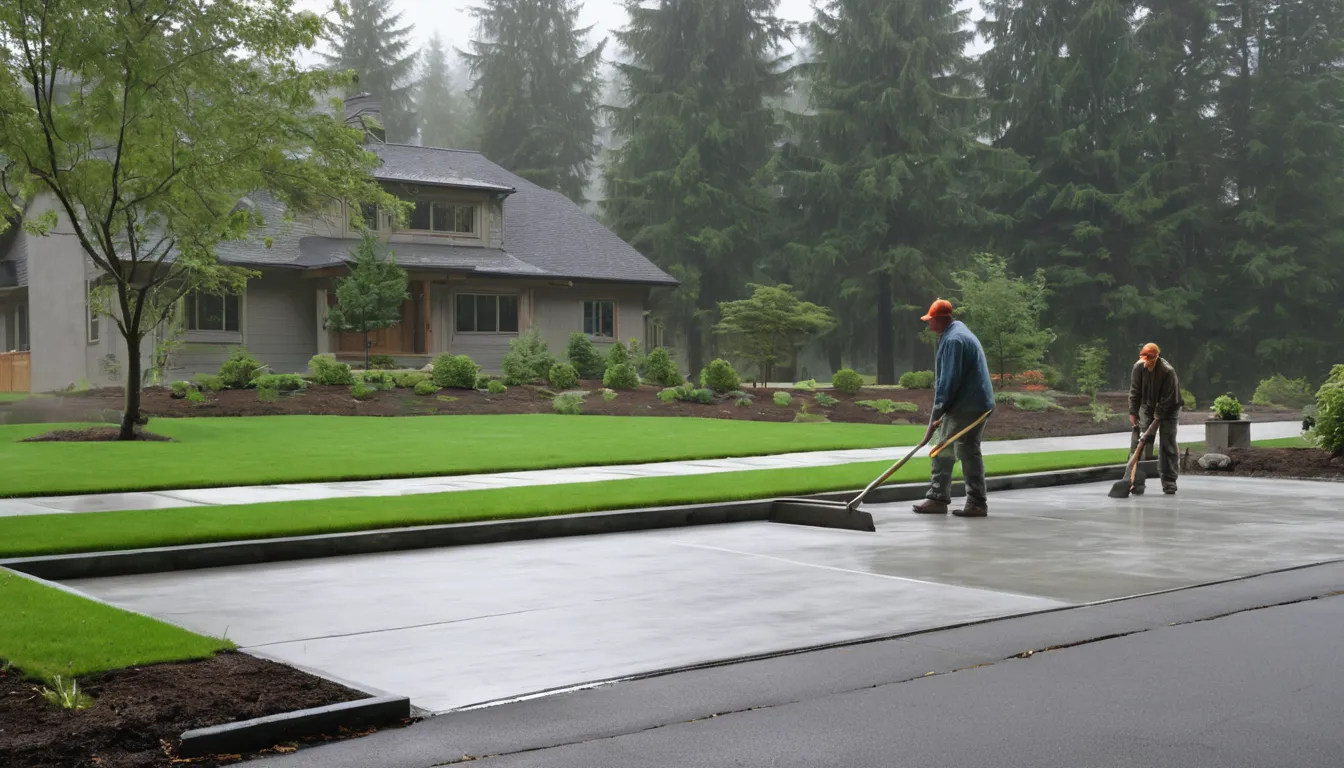
The concrete is poured, smoothed, textured and cut with joints so it can move.
Prices vary a lot by size, site and local rates. These are typical U.S. ranges, so always get a written quote before work begins.
| Item | Typical range | Notes |
|---|---|---|
| Plain poured driveway | $6 – $12 per sq. ft. | Basic broom finish, standard thickness |
| Old slab removal | $1 – $3 per sq. ft. | Depends on thickness and hauling |
| Grading and stone base | $1 – $4 per sq. ft. | More if the ground is soft or sloped |
| Steel reinforcement | $0.50 – $1.50 per sq. ft. | Rebar or wire mesh, per the plan |
| Permit and apron work | $100 – $1,500 | Rules and fees differ by city |
| Sealing | $0.50 – $2 per sq. ft. | Often done after the concrete has cured |
Walk the driveway and jot down cracks, puddles and moss. Take a few clear photos.
Use the request form, or request a callback to check provider availability near you.
Look at size, thickness, drainage and finish in each quote, not just the total.
Agree on a date, clear the area, and ask how the provider handles rain.
You get simple explanations and a calm next step, so you can decide at your own pace.
You are matched with independent providers who work near you and know rainy, damp conditions.
Ask for a written estimate and compare what each one includes before you choose a provider.
Requesting an estimate does not commit you to hiring anyone.
Planning a new driveway or patio? Send a request and Partilla Concrete will point you to a local provider in our network. Or Request a callback to ask about provider availability.
Look for wide or spreading cracks, sunken or tilted slabs, crumbling surface and puddles that never drain. One small crack may only need repair. A local provider can inspect it and tell you which path fits.
Many slabs can handle foot traffic within a few days and cars after about a week, but timing depends on the mix and the weather. Your provider will tell you when it is safe to use.
Often, yes, especially if the work touches the street apron or sidewalk. Rules differ by city. Ask the provider who handles permits, and check with your local building office if you are unsure.
Planning a new driveway or patio? Send a request and Partilla Concrete will point you to a local provider in our network. Or Request a callback to ask about provider availability.
No obligation